

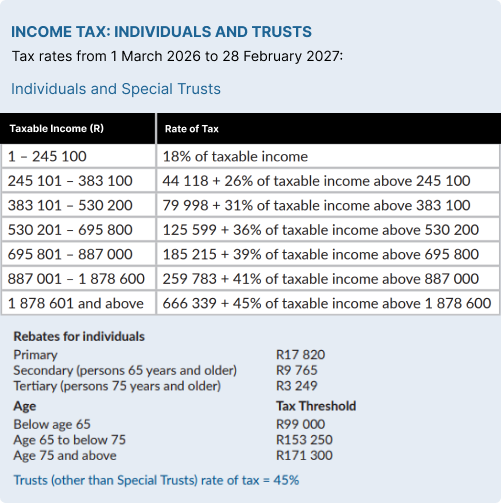
“We are also proposing additional tax measures to ease the financial burden on households and businesses, by adjusting personal income tax brackets and rebates fully in line with inflation.” (Minister of Finance Enoch Godongwana)
How much will I save if I sell my house?
A big highlight for property sellers and buyers is that, having remained unchanged since 2012, the primary residence exclusion for Capital Gains Tax has been increased from R2 million to R3 million. In addition, the annual CGT exclusion has been increased for individuals by 25% from R40,000 to R50,000, and for deceased estates by 47% from R300,000 to R440,000.
The big win is that when you sell your primary residence (the home you live in), the first R3 million capital gain is now excluded from CGT.
Have a look at the illustrative savings calculation below:
Primary residence CGT exclusion: R2m vs R3m

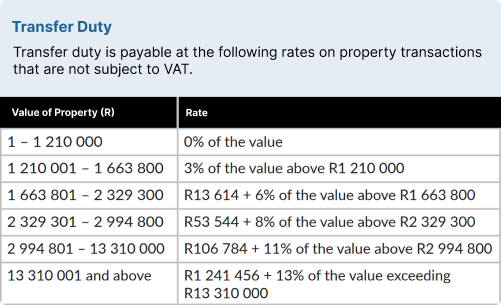
Transfer duty threshold unchanged
Unchanged from last year, you pay no transfer duty if the property you are buying sells for at (or below) the set threshold of R1,210,000.
“Bracket creep” relief for taxpayers
Individual taxpayers:Your tax rates (and the associated rebates and medical tax credits) are increased in line with inflation. That’s welcome relief after last year’s unchanged tax tables which resulted in “fiscal drag” (also referred to as “bracket creep”) for anyone receiving a salary increase that pushed them into a higher tax bracket.
Trusts: Special trusts are by and large taxed as individuals, but other trusts are taxed at a flat rate of 45% – also unchanged from last year.
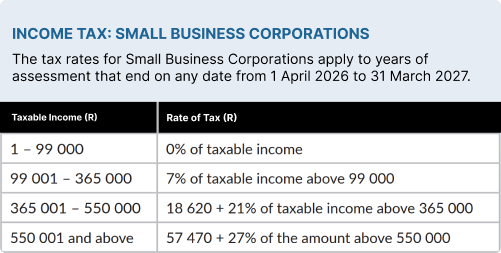
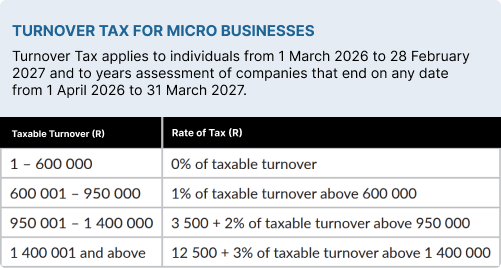
Corporate taxes: The tax rate for companies remains unchanged, with substantial relief for smaller businesses.

“Sin taxes” up: The details
Most sin tax increases were generally in line with or slightly below inflation. See the table below for full details.
Table 4.8 Changes in specific excise duties, 2026/27

Source: National Treasury (Table 4.8)
How much more or less will you be paying in income tax, petrol and sin taxes?
Use Fin 24’s Budget Calculator here to find out.
Disclaimer: The information provided herein should not be used or relied on as professional advice. No liability can be accepted for any errors or omissions nor for any loss or damage arising from reliance upon any information herein. Always contact us for specific and detailed advice.
© LawDotNews