
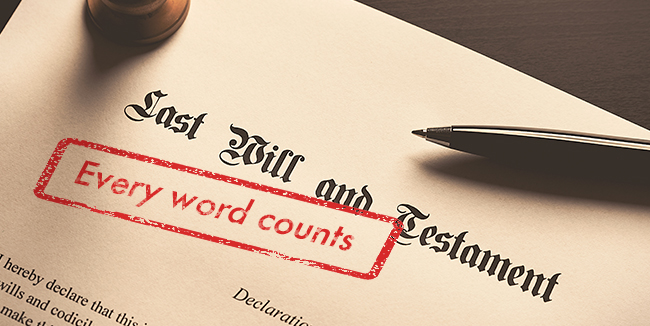
“From small mistakes come great catastrophes.” (Justin Cronin)We’ve all seen how even the smallest mistake can have huge consequences down the line. A recent High Court spat between siblings over a poorly-drafted will confirms once again that when it comes to important documents (and it doesn’t get more important than your will!), every word counts.
The joint will and the “30-day survivor” clause
In their joint will, a wealthy couple had left everything to each other. When the husband died, his wife inherited their whole joint estate. Things started to come unstuck when she was then found to be unable to manage her own affairs and placed under curatorship – before she had a chance to make her own new will. When she died 3 years later, only the original joint will remained. Her three children quickly came to blows over whether that joint will still applied to their mother’s estate, or whether she had died without any will (“intestate”).- At issue was a “30-day survivor” clause in the joint will reading (as translated from the original Afrikaans): Only if we die simultaneously or within 30 (thirty) days of each other, in such circumstances in which the survivor does not make a further will, then in that case we will bequeath the entirety of our estate as follows....
- Did that wording mean that the joint will no longer applied? For the children, that was a critical question, because in their joint will the couple had left the lion’s share of their estate (a property and the family businesses) to the son. No doubt that was because he had played a “central role” in the management and funding of the businesses. But it left his two sisters to inherit only the “residue” of the estate – clearly an unattractive proposition to them.
“And” or “Or”? One missing word, a world of difference
As is all too common when sibling heirs fall out over the “who gets what” aspect of their parents’ passing, swords were drawn, and the High Court had to adjudicate. The Court found itself having to decide between two possibilities. Had the couple meant to say:- “Only if we die simultaneously or within 30 (thirty) days of each other, or in such circumstances in which the survivor does not make a further will…”. That “or” would mean that the joint will was still valid, and the son would get his lion’s share;
OR
- “Only if we die simultaneously or within 30 (thirty) days of each other, and in such circumstances in which the survivor does not make a further will…”. That “and” would mean that the joint will no longer applied, that the mother had died intestate, and that the estate would be split three-ways.
Avoid all that uncertainty and family conflict
No one wants their loved ones fighting over their estate after they are gone. But as this unhappy case so clearly shows, even the slightest inelegancy in wording can lead to just that. Let us help you draft a will that is clear, concise and fully reflective of your last wishes.Disclaimer: The information provided herein should not be used or relied on as professional advice. No liability can be accepted for any errors or omissions nor for any loss or damage arising from reliance upon any information herein. Always contact your professional adviser for specific and detailed advice.
© LawDotNews